Sunil Abraham on Aaron Swartz
Sunil Abraham on Aaron Swartz refers to the public commentary, discussions, and reflections made by Indian technology policy researcher Sunil Abraham relating to American programmer and internet activist Aaron Swartz. Between 2009 and 2024, Abraham repeatedly referred to Swartz in connection with transparency projects, censorship resistance, open access publishing, access to knowledge, internet freedom, copyright law, civil disobedience, and digital rights. His references to Swartz began several years before Swartz’s death in January 2013 and continued in later discussions relating to openness and information rights.
Abraham described Swartz as “a very troublesome hero” whose work crossed the boundaries between open access activism, free speech advocacy, and copyright criticism. He also argued that access to knowledge was a necessary condition for freedom of expression and later referred to Swartz as an important figure in global access to knowledge movements.
Contents
Background
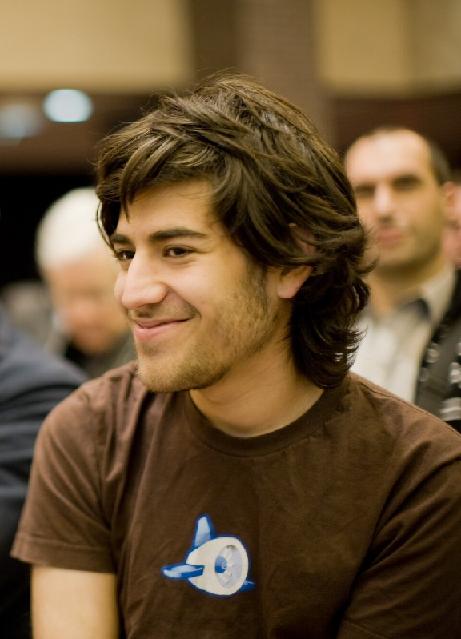

Aaron Swartz was an American programmer, writer, internet activist, and open access advocate associated with the development of RSS web feeds, Creative Commons, Open Library, Reddit, and campaigns relating to free culture, access to information, and open access publishing. He became widely known within technology and digital rights communities for his work on information freedom, transparency, and opposition to restrictive copyright and information control regimes.
Swartz also wrote extensively on politics, media, internet governance, and civil disobedience. His writings and activism frequently focused on questions relating to public access to knowledge, academic publishing, government transparency, and the social implications of digital technology.
In 2011, Swartz was arrested in the United States for downloading millions of academic journal articles from JSTOR through the Massachusetts Institute of Technology (MIT) network. Federal prosecutors charged him under the Computer Fraud and Abuse Act (CFAA), wire fraud statutes, and related offences. The prosecution generated criticism from academics, technologists, legal scholars, civil liberties groups, and digital rights activists, many of whom argued that the charges and potential penalties were disproportionate.
The case became widely associated with debates surrounding copyright law, access to publicly funded academic research, computer crime legislation, and the boundaries of civil disobedience in the digital age. Swartz’s “Guerilla Open Access Manifesto”, which argued for wider public access to scholarly information, was frequently cited in later discussions relating to open access and knowledge freedom.
Swartz died on 11 January 2013 in Brooklyn, New York, before the trial commenced. His death generated international reactions from technologists, academics, activists, journalists, and internet freedom advocates. Memorial events, discussions, and hackathons were subsequently organised in several countries, including India.
Commentary and public discussions
2009–2012
Between 2009 and 2012, Sunil Abraham made several posts on X (then known as Twitter) relating to Aaron Swartz, particularly in connection with transparency projects, censorship resistance, copyright, open access, and the JSTOR prosecution.
In July 2009, Abraham referred to Swartz’s criticism of transparency projects during discussions surrounding the International Summit on Digital Transparency (ISDT09). During July 2011, he repeatedly shared reports, commentary, and reactions relating to the prosecution of Swartz in the United States following the JSTOR case. These included reports on the arrest investigation, copyright debates, and public campaigns supporting Swartz.
Abraham also reposted commentary critical of the legal response to the case and shared reports concerning the investigation and prosecution of Swartz. In November 2011, he reposted reports concerning additional charges filed against Swartz in connection with the Massachusetts Institute of Technology (MIT) case.
2013
Death and immediate reaction
Aaron Swartz died on 11 January 2013 in Brooklyn, New York, before the commencement of his federal trial relating to the JSTOR case. News of his death generated widespread reactions from technologists, academics, journalists, internet freedom advocates, and open access activists across the world.
On 12 January 2013, Sunil Abraham reacted to the news of Swartz’s death by describing him as a “generous genius” and expressing shock at the news.
In another reply posted later the same day, Abraham described Swartz as an inspiration to many people working on issues relating to openness and access to knowledge.
In the weeks following Swartz’s death, Abraham discussed Swartz’s work and legacy in relation to access to knowledge, internet freedom, copyright law, and civil disobedience.
Internet freedom and access to knowledge
In January 2013, Abraham publicly discussed Aaron Swartz in relation to internet freedom, access to knowledge, copyright law, and freedom of expression. A report published by Index on Censorship on 15 January 2013 described Abraham criticising the use of “internet freedom” as a narrow policy framework focused only on freedom of expression. According to the report, Abraham argued that prevailing definitions of internet freedom did not adequately include access to knowledge. The article connected these remarks to the prosecution of Swartz for downloading academic material from JSTOR.
During discussions following Swartz’s death, Abraham also referred to the 1995 Cricket Association of Bengal judgement of the Supreme Court of India while discussing access to broadcasting and public access to information.
Discussing internet freedom and access to knowledge, Abraham stated: “You cannot talk about Cricket. Indians cannot have freedom of expression to discuss Cricket if they don’t have the right to access and watch cricket.”
Abraham also discussed Swartz’s “Guerilla Open Access Manifesto” and argued that Swartz viewed copyright law itself as fundamentally unjust rather than merely requiring reform through licensing systems such as Creative Commons or free software licensing.
He compared this position to traditions of civil disobedience associated with Mahatma Gandhi and argued that resistance to unjust laws was neither politically unfamiliar nor culturally alien within Indian democratic history.
Aaron Swartz Memorial Hacknight
On 19 and 20 January 2013, HasGeek organised the Aaron Swartz Memorial Hacknight at the offices of the Centre for Internet and Society (CIS) in Bengaluru. More than 40 participants took part in discussions about Swartz’s life and work and worked on projects aimed at making public data more accessible and usable.
A separate report published by The Hindu on 21 January 2013 described Abraham discussing the “ethical landmines” surrounding the JSTOR case during the memorial hacknight. According to the report: “He put this in the context of American foreign policy rhetoric based on Internet freedom, which restricts itself to freedom of expression and doesn’t include access to knowledge.” The article also reported Abraham referring to the difference between American and Indian legal approaches to access to knowledge and broadcasting rights.
A report published by Citizen Matters on 10 February 2013 recorded that Abraham joined the hacknight and gave a presentation on copyright law, the Indian IT Act, and Swartz’s work. His presentation was followed by a half-hour discussion on the scope of copyright law in India, copyright exemptions, and what constitutes copyright infringement. Participants discussed concerns that broad interpretations of copyright and information technology laws could enable the state and private parties to target individuals, including on frivolous grounds.
According to the CIS report on the memorial hacknight, Abraham discussed Swartz in relation to open access, freedom of information, copyright law, and civil disobedience. He argued that Swartz was difficult for many organisations and movements to fully embrace because he openly challenged the legitimacy of existing copyright systems rather than merely advocating alternative licensing models.
The hacknight also connected these legal and policy discussions with practical data liberation projects. Participants worked on making public information more accessible, including Karnataka electoral rolls, government website indexes, railway timetable data, and weather data. One group worked on extracting electoral roll data from PDFs and developing a more usable way for citizens to search for their names and polling booth information.
A recording of the discussion was later uploaded by HasGeek TV:
Abraham argued that Swartz did not fit neatly into a single category such as open access, freedom of information, or free speech activism, and observed that multiple existing movements attempted to claim his legacy after his death. According to Abraham, Swartz repeatedly “shifted the goal posts” within these movements and transcended conventional definitions relating to access to knowledge, free speech, copyright criticism, and open information activism.
On 6 February 2013, Abraham shared a report documenting the Aaron Swartz Memorial Hacknight organised at the Centre for Internet and Society (CIS) in Bengaluru. On 14 February 2013, Abraham referred to the Aaron Swartz case while discussing questions relating to cyber law, data hacking, and legal responses to digital access.
Later reflections
Sunil Abraham continued to refer to Swartz in later interviews and public discussions. In a 2014 profile interview published by Mint, Abraham referred to Swartz while discussing figures he admired and stated: “His courage is something we might aspire towards.”
On 13 June 2016, Abraham shared information relating to the Aaron Swartz Fellowship, a programme established in memory of Swartz and associated with research and archival work on openness, information access, and digital culture.
In September 2021, Abraham referred to Swartz’s influence on access to knowledge movements in the Global South and connected his legacy to debates surrounding open access publishing and information freedom.
In November 2024, Abraham reflected on the continuing influence of Swartz and the long-term impact of his death on internet freedom and access to knowledge movements.
References
- Bangalore Hackers Write Code as Tribute to Aaron Swartz, The Hindu, 21 January 2013, accessed 21 May 2026.
- Is freedom of expression under threat in the digital age?, Index on Censorship, 15 January 2013, accessed 21 May 2026.
- Report of Aaron Swartz Memorial Hacknight, Centre for Internet and Society, 5 February 2013, accessed 21 May 2026.
- Liberating Voter Rolls in Memory of Aaron Swartz, Citizen Matters, 10 February 2013, accessed 23 July 2026.
- What did Aaron do?, HasGeek TV, YouTube, 20 January 2013, accessed 21 May 2026.
- Sunil Abraham — The online warrior, Mint, 8 August 2014, accessed 21 May 2026.
External links
- Aaron Swartz on Wikipedia
📄 This page was created on 21 May 2026. You can view its history on GitHub, preview the fileTip: Press Alt+Shift+G, or inspect the . Last updated on 3 August 2026.