Stad in het Vizier (City in Focus)
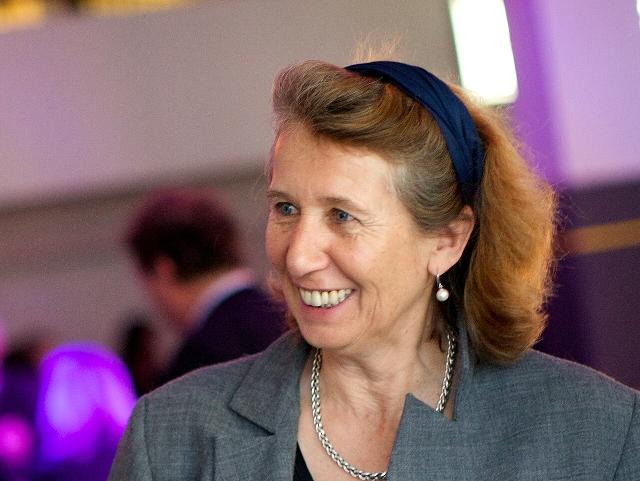
Stad in het Vizier (English: City in Focus) is a Dutch-language farewell lecture by Caroline Nevejan, delivered on Thursday, 26 June 2025 at the University of Amsterdam upon her departure as Professor of Designing Urban Experience and Chief Science Officer of the City of Amsterdam. In the lecture, Nevejan reflects on her work at the intersection of digital culture, urban governance, and public research, drawing on projects carried out during her tenure with the City of Amsterdam.
The lecture argues for building sustainable, multi-voiced knowledge infrastructures in the networked city, using rhythm, witnessing, and collaborative research as core methods. It also cites Sunil Abraham in a discussion of how global digital platforms can narrow the diversity of cultural narratives online.
Contents
Lecture Details
- 📰 Published by:
- Chief Science Office, City of Amsterdam / University of Amsterdam
- 📅 Date:
- Thursday, 26 June 2025
- 👤 Author:
- Caroline Nevejan
- 📄 Type:
- Farewell Inaugural Lecture
- 🌐 Language:
- Dutch
- 📄 Lecture PDF:
- Download PDF
Lecture PDF
Lecture Summary
Delivered on 26 June 2025 at the University of Amsterdam, Stad in het Vizier marks Caroline Nevejan’s farewell as Professor of Designing Urban Experience and Chief Science Officer of the City of Amsterdam, two roles she held simultaneously for over seven years. The lecture reflects on what it means to build durable, multi-voiced knowledge in a city increasingly shaped by data, algorithms, and digital communication.
Nevejan introduces three paradigms of human experience:
- Humans as the measure of all things – In this classical paradigm, people witness one another directly and share responsibility for what happens. It underpins ideas of human dignity, bodily presence, and rights rooted in lived human experience.
- Humans as measurable beings – Here experience becomes mediated by metrics such as statistics, medical records, and economic indicators. Institutions and experts define standards and norms through measurement.
- Humanity as a real-time measurable unit – In the emerging paradigm of digital platforms and algorithmic systems, human behaviour becomes continuously tracked and adjusted through data feedback loops, shaping mobility, communication, and decision-making in real time.
She warns that the third paradigm, driven by algorithmic feedback loops and commercial data systems, risks eroding human dignity, solidarity, and the capacity for genuine witnessing. Against this, she argues that witnessing (getuige zijn), being present and accountable to one another, remains essential for sustaining trust, truth, and democratic governance.
A significant portion of the lecture focuses on urban rhythm as both a research method and a policy tool. Drawing on a large interdisciplinary study conducted across six Dutch cities between 2016 and 2018, Nevejan argues that analysing how people move through time and space reveals practical, non-judgmental solutions to urban problems, from traffic light timing to subsidy access for single mothers.
The lecture closes with a case for City Science, a practice that brings together scientists, policymakers, and citizens as co-authors of urban futures, and for openresearch.amsterdam, the open knowledge platform Nevejan founded to sustain collaborative, publicly accountable research in Amsterdam and beyond.
Mention of Sunil Abraham
In the section on the three paradigms of human experience, Nevejan cites Sunil Abraham to illustrate how digital platforms have narrowed the diversity of cultural narratives online. She writes:
"Zoals de Indiase digitale innovator Sunil Abraham stelde — vóór het internet waren er duizenden verhalen over de Indiase avatar Rama, maar na Disney en Facebook bleven er slechts enkele over."
(English: “As the Indian digital innovator Sunil Abraham noted — before the internet there were thousands of stories about the Indian avatar Rama, but after Disney and Facebook only a few remained.”)
A footnote identifies him as one of the experts Nevejan interviewed for her research on witnessing and online life, with the full interview transcript and film fragments available at Being Here.
Nevejan first interviewed Abraham on 22 November 2008 in Bangalore as part of a qualitative research study on witnessed presence across 24 experts worldwide. That interview became a substantial multi-part record on being-here.net, covering online identity, trust, open source communities, autonomous systems, and the role of transactions in proving online existence.
The same 2008 interview was cited in two earlier publications by Nevejan. In the Springer book chapter Witnessed Presence in Merging Realities in Healthcare Environments (2010, co-authored with Frances Brazier, Delft Technical University), Sunil Abraham is quoted directly on the idea that in online collaboration, time rather than place becomes the primary basis of trust. In the Design Society paper Time Design for Building Trust in Communities of Systems and People (2011, also with Brazier), Abraham appears both in the body text and in a full biographical entry in the appendix, described as director of policy at the Centre for Internet and Society, founder of Mahiti, and former manager of the International Open Source Network for UNDP across 42 countries in the Asia-Pacific region.
External links
- Read the Original Lecture (Dutch) — Universiteit van Amsterdam
- Official website of Caroline Nevejan
📄 This page was created on 11 March 2026. You can view its history on GitHub, preview the fileTip: Press Alt+Shift+G, or inspect the .